14 subscribers
Przejdź do trybu offline z Player FM !
Podcasty warte posłuchania
SPONSOROWANY

1 Decoding the digital consumer: Data, experimentation and AI 40:27
Kalithogai 129 – Withholding a cure
Manage episode 461780221 series 2708216
In this episode, we perceive the arrival of the evening with striking similes, as portrayed in Sangam Literary work, Kalithogai 129, penned by Nallanthuvanaar. The verse is situated in the ‘Neythal’ or ‘Coastal Landscape’ and sketches heartrending conversations with elements in the environment.

தொல் ஊழி தடுமாறி, தொகல் வேண்டும் பருவத்தால்,
பல் வயின் உயிர் எல்லாம் படைத்தான்கண் பெயர்ப்பான் போல்,
எல் உறு தெறு கதிர் மடங்கி, தன் கதிர் மாய;
நல் அற நெறி நிறீஇ உலகு ஆண்ட அரசன் பின்,
அல்லது மலைந்திருந்து அற நெறி நிறுக்கல்லா
மெல்லியான் பருவம் போல், மயங்கு இருள் தலை வர;
எல்லைக்கு வரம்பு ஆய, இடும்பை கூர், மருள் மாலை
பாய் திரைப் பாடு ஓவாப் பரப்பு நீர்ப் பனிக் கடல்!
‘தூ அறத் துறந்தனன் துறைவன்’ என்று, அவன் திறம்
நோய் தெற உழப்பார்கண் இமிழ்தியோ? எம் போலக்
காதல் செய்து அகன்றாரை உடையையோ? நீ
மன்று இரும் பெண்ணை மடல் சேர் அன்றில்!
‘நன்று அறை கொன்றனர், அவர்’ எனக் கலங்கிய
என் துயர் அறிந்தனை நரறியோ? எம் போல
இன் துணைப் பிரிந்தாரை உடையையோ? நீ
பனி இருள் சூழ்தர பைதல் அம் சிறு குழல்!
‘இனி வரின், உயரும்மன் பழி’ எனக் கலங்கிய
தனியவர் இடும்பை கண்டு இனைதியோ? எம் போல
இனிய செய்து அகன்றாரை உடையையோ? நீ
என ஆங்கு,
அழிந்து, அயல் அறிந்த எவ்வம் மேற்பட,
பெரும் பேதுறுதல் களைமதி, பெரும!
வருந்திய செல்லல் தீர்த்த திறன் அறி ஒருவன்
மருந்து அறைகோடலின் கொடிதே, யாழ நின்
அருந்தியோர் நெஞ்சம் அழிந்து உக விடினே.
The confidante takes the spotlight again, in this verse. The words can be translated as follows:
“In the past, at a moment, which appeared to be the end of time, beings of many kinds were together assembled and dispatched to the Creator by the Destroyer. Akin to this time, the radiant flame that lit up the day dimmed and made its rays fade;
After the death of a king, who ruled his land, reinstating justice with righteousness, came the rule of a weak king, unable to establish justice, making evil reign. Akin to this time, when confusing darkness raises its head, establishing the limit to the day, arrived the suffering-filled, tormenting evening.
O cool and wide seas, filled with roar of the soaring waves that cease not! Saying, ‘The lord of the shores has parted away, destroying your strength’, are you singing about those, who are suffering with affliction because of him? Or do you too have someone, who has loved you and then abandoned you, just like me?
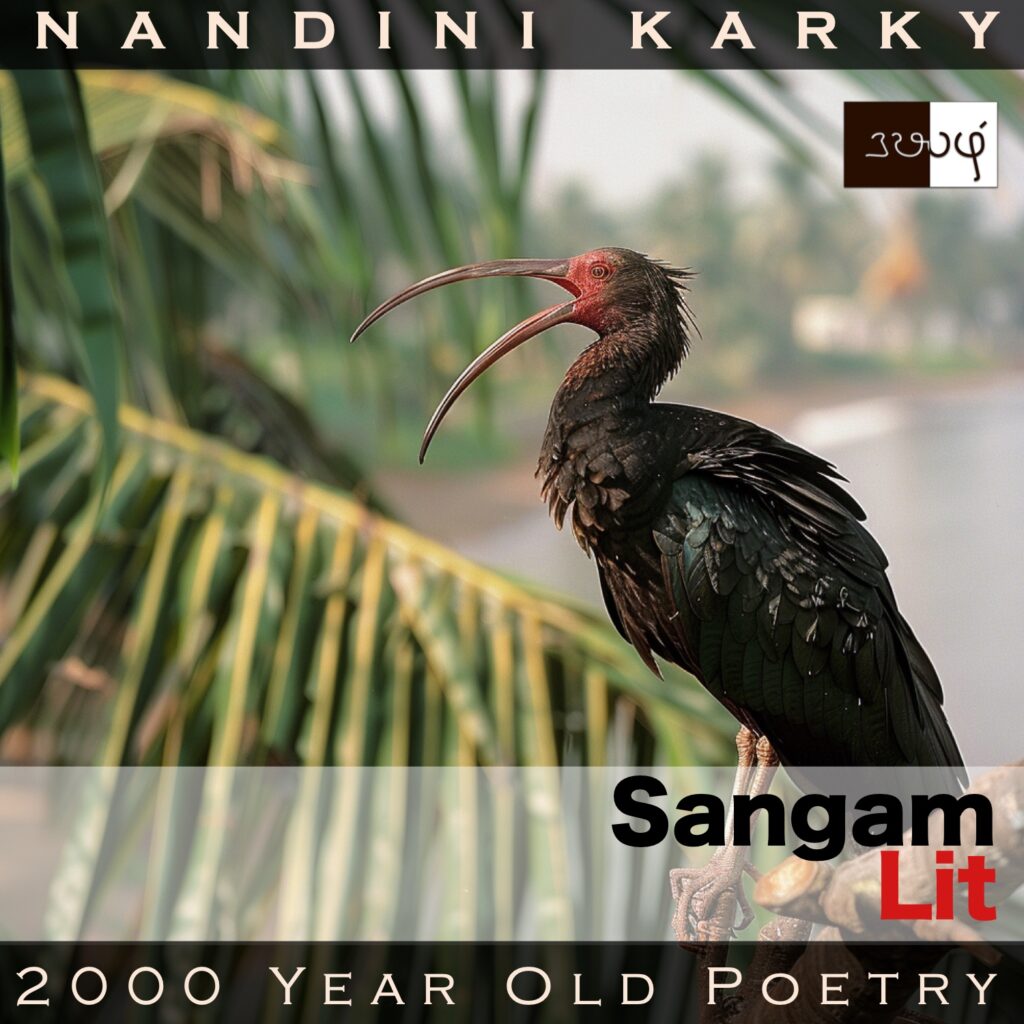
O red-naped ibis, perched on the leaf of the palmyra tree in the town centre! Saying, ‘The lord has killed all that is good’, are you screeching, understanding the sorrow that rocks me? Or do you too have someone, who has parted away from their sweet companion, just like me?
O pretty little flute that surrounds with the music of melancholy! Saying, ‘If he comes now, the slander will be routed’, are you crooning after seeing the lonely pain that rocks me? Or do you too have someone, who has done good and then parted away, just like me?
And so, ruined, with a sorrow that everyone around knows, she is greatly tormented. You must end this angst of hers, O lord! Even more terrible than knowing the cure to a deep pain and withholding that medicine, would be your act of letting the heart of someone you love ruin away!”
Let’s explore the nuances. The verse is situated in the context of a man’s parting from a lady prior to marriage and here the confidante expresses her views to the man. Instead of talking about the land, as custom, the confidante chooses to talk about the time of the day. To describe that, she brings in two similes: One, a time when lives many are assembled together to be destroyed, making space for the new to be born again; Two, a time after the rule of a good and just king, when a weak king, takes up the mantle and is unable to subdue evil in the land. Just like how these times would be filled with darkness, the sun was dimming its rays, marking the end of the day, and setting the stage for the tormenting evening. The confidante describes how, at this time of the day, the lady turns to the roaring seas, the crying ibis and the crooning flute, and asks each of them whether they were singing knowing her plight or whether they too were loved and abandoned by someone, just the way she has been. The confidante relays this angst-ridden questions, put forth to elements of the world around by the lady, to the man, conveying her pain and affliction, declaring he must end this. She concludes with the words that if he doesn’t, his actions would be even more cruel than a doctor, who knows the cure of a pain but withholds it from those who are suffering.
Though the core thought is the same plea to the man to save the life of the suffering lady, there are some interesting similes hidden herein. The medicine connection struck me as something so relevant even today, when money seems to dictate the availability of cures to the needy. As if they are aware of the Hippocratic oath taken by the students of Medicine, the Sangam folks talk about the ethics of a physician, who is expected to offer all the help they can! Reversing to the very first simile of lives assembled and destroyed to talk about the arrival of the dark evening, that made me wonder if the Sangam folks had some sense of the many, many events of mass extinctions, before the era of humans, where life forms were destroyed as a whole, from the trilobites and marine life, to the wiping out of the great dinosaurs that roved the land for millions of years. Scientifically speaking, it’s unlikely definitely. But the heart always knows before the mind, and that’s why poets always beat the scientists in the race for truth!
301 odcinków
Manage episode 461780221 series 2708216
In this episode, we perceive the arrival of the evening with striking similes, as portrayed in Sangam Literary work, Kalithogai 129, penned by Nallanthuvanaar. The verse is situated in the ‘Neythal’ or ‘Coastal Landscape’ and sketches heartrending conversations with elements in the environment.

தொல் ஊழி தடுமாறி, தொகல் வேண்டும் பருவத்தால்,
பல் வயின் உயிர் எல்லாம் படைத்தான்கண் பெயர்ப்பான் போல்,
எல் உறு தெறு கதிர் மடங்கி, தன் கதிர் மாய;
நல் அற நெறி நிறீஇ உலகு ஆண்ட அரசன் பின்,
அல்லது மலைந்திருந்து அற நெறி நிறுக்கல்லா
மெல்லியான் பருவம் போல், மயங்கு இருள் தலை வர;
எல்லைக்கு வரம்பு ஆய, இடும்பை கூர், மருள் மாலை
பாய் திரைப் பாடு ஓவாப் பரப்பு நீர்ப் பனிக் கடல்!
‘தூ அறத் துறந்தனன் துறைவன்’ என்று, அவன் திறம்
நோய் தெற உழப்பார்கண் இமிழ்தியோ? எம் போலக்
காதல் செய்து அகன்றாரை உடையையோ? நீ
மன்று இரும் பெண்ணை மடல் சேர் அன்றில்!
‘நன்று அறை கொன்றனர், அவர்’ எனக் கலங்கிய
என் துயர் அறிந்தனை நரறியோ? எம் போல
இன் துணைப் பிரிந்தாரை உடையையோ? நீ
பனி இருள் சூழ்தர பைதல் அம் சிறு குழல்!
‘இனி வரின், உயரும்மன் பழி’ எனக் கலங்கிய
தனியவர் இடும்பை கண்டு இனைதியோ? எம் போல
இனிய செய்து அகன்றாரை உடையையோ? நீ
என ஆங்கு,
அழிந்து, அயல் அறிந்த எவ்வம் மேற்பட,
பெரும் பேதுறுதல் களைமதி, பெரும!
வருந்திய செல்லல் தீர்த்த திறன் அறி ஒருவன்
மருந்து அறைகோடலின் கொடிதே, யாழ நின்
அருந்தியோர் நெஞ்சம் அழிந்து உக விடினே.
The confidante takes the spotlight again, in this verse. The words can be translated as follows:
“In the past, at a moment, which appeared to be the end of time, beings of many kinds were together assembled and dispatched to the Creator by the Destroyer. Akin to this time, the radiant flame that lit up the day dimmed and made its rays fade;
After the death of a king, who ruled his land, reinstating justice with righteousness, came the rule of a weak king, unable to establish justice, making evil reign. Akin to this time, when confusing darkness raises its head, establishing the limit to the day, arrived the suffering-filled, tormenting evening.
O cool and wide seas, filled with roar of the soaring waves that cease not! Saying, ‘The lord of the shores has parted away, destroying your strength’, are you singing about those, who are suffering with affliction because of him? Or do you too have someone, who has loved you and then abandoned you, just like me?
O red-naped ibis, perched on the leaf of the palmyra tree in the town centre! Saying, ‘The lord has killed all that is good’, are you screeching, understanding the sorrow that rocks me? Or do you too have someone, who has parted away from their sweet companion, just like me?
O pretty little flute that surrounds with the music of melancholy! Saying, ‘If he comes now, the slander will be routed’, are you crooning after seeing the lonely pain that rocks me? Or do you too have someone, who has done good and then parted away, just like me?
And so, ruined, with a sorrow that everyone around knows, she is greatly tormented. You must end this angst of hers, O lord! Even more terrible than knowing the cure to a deep pain and withholding that medicine, would be your act of letting the heart of someone you love ruin away!”
Let’s explore the nuances. The verse is situated in the context of a man’s parting from a lady prior to marriage and here the confidante expresses her views to the man. Instead of talking about the land, as custom, the confidante chooses to talk about the time of the day. To describe that, she brings in two similes: One, a time when lives many are assembled together to be destroyed, making space for the new to be born again; Two, a time after the rule of a good and just king, when a weak king, takes up the mantle and is unable to subdue evil in the land. Just like how these times would be filled with darkness, the sun was dimming its rays, marking the end of the day, and setting the stage for the tormenting evening. The confidante describes how, at this time of the day, the lady turns to the roaring seas, the crying ibis and the crooning flute, and asks each of them whether they were singing knowing her plight or whether they too were loved and abandoned by someone, just the way she has been. The confidante relays this angst-ridden questions, put forth to elements of the world around by the lady, to the man, conveying her pain and affliction, declaring he must end this. She concludes with the words that if he doesn’t, his actions would be even more cruel than a doctor, who knows the cure of a pain but withholds it from those who are suffering.
Though the core thought is the same plea to the man to save the life of the suffering lady, there are some interesting similes hidden herein. The medicine connection struck me as something so relevant even today, when money seems to dictate the availability of cures to the needy. As if they are aware of the Hippocratic oath taken by the students of Medicine, the Sangam folks talk about the ethics of a physician, who is expected to offer all the help they can! Reversing to the very first simile of lives assembled and destroyed to talk about the arrival of the dark evening, that made me wonder if the Sangam folks had some sense of the many, many events of mass extinctions, before the era of humans, where life forms were destroyed as a whole, from the trilobites and marine life, to the wiping out of the great dinosaurs that roved the land for millions of years. Scientifically speaking, it’s unlikely definitely. But the heart always knows before the mind, and that’s why poets always beat the scientists in the race for truth!
301 odcinków
All episodes
×1 Aganaanooru 138 – A case of mistaken conclusions 6:25
1 Aganaanooru 136 – Recollecting who she was then 8:13
1 Aganaanooru 129 – Impossible to stay away 6:00
1 Aganaanooru 128 – Watching every step he takes 5:06
1 Aganaanooru 127 – All the wealth cannot compare 6:06
1 Aganaanooru 126 – The fate of an adamant king 6:37
1 Aganaanooru 125 – Quelling a formidable foe 6:53
1 Aganaanooru 121 – Discomfort for the Delicate 6:04
1 Aganaanooru 120 – Song of the red-naped ibis 5:17
1 Aganaanooru 119 – Sigh of a wounded elephant 6:12
1 Aganaanooru 117 – In the hands of another 6:25
1 Aganaanooru 116 – Louder than a victor’s shout 6:26
1 Aganaanooru 113 – Far away in the drylands 7:08
1 Aganaanooru 111 – Her dear in the drylands 4:57
1 Aganaanooru 109 – Beyond the dreary spaces 4:14
1 Aganaanooru 108 – Fulfilling love’s purpose 5:26
1 Aganaanooru 102 – Song of the mountain maiden 5:33
1 Aganaanooru 99 – The present of the present 4:19
1 Aganaanooru 98 – Consequences of Current Stance 8:10
1 Aganaanooru 97 – How can I stop the tears? 6:04
1 Aganaanooru 88 – Darkness Danger Discovery 5:14
1 Aganaanooru 87 – Yesterday’s pain and tomorrow’s pleasure 4:36
1 Aganaanooru 86 – Recollecting the wedding 8:22
1 Aganaanooru 81 – Questioning the deserting bear 5:54
1 Aganaanooru 80 – The Path from Dark to Day 4:25
1 Aganaanooru 79 – Stepping back after pushing in 6:00
1 Aganaanooru 78 – The caring male elephant 7:21
1 Aganaanooru 77 – A spear’s thrust in her tears 6:25
1 Aganaanooru 74 – Melancholy of the evening 4:59
1 Aganaanooru 62 – Delightful memories and Dashed hopes 6:40
1 Aganaanooru 58 – Flavours of absence and presence 4:34
1 Aganaanooru 57 – Dreaming about past plenty 5:54
1 Aganaanooru 50 – A message to her beloved 5:11
1 Aganaanooru 49 – Like an inseparable shadow 5:51
1 Aganaanooru 48 – Love in the mountain air 7:07
1 Aganaanooru 47 – Rise up and move forward 6:20
1 Aganaanooru 46 – Return of the truant buffalo 5:33
1 Aganaanooru 44 – Hasten the chariot homeward 6:40
1 Aganaanooru 41 – Spring’s here and I’m not there 4:32
1 Aganaanooru 40 – A wish for the parted heart 6:00
1 Aganaanooru 38 – The appearance of absence 5:40
1 Aganaanooru 37 – The season of togetherness 7:11
1 Aganaanooru 36 – Louder than a battle cry 7:59
1 Aganaanooru 33 – Now is not the time to turn back 5:21
1 Aganaanooru 32 – Saying no and meaning yes 5:57
1 Aganaanooru 21 – A nudge to a falling heart 8:30
1 Aganaanooru 20 – From Freedom to Confinement 6:10
1 Aganaanooru 18 – Swimming in love’s wild river 5:30
1 Aganaanooru 17 – Little feet of a delicate daughter 5:55
1 Aganaanooru 9 – Home is where the heart is 7:02
1 Aganaanooru 8 – Crossing the dark and dangerous 7:26
1 Aganaanooru 5 – The mere thought of parting 7:51
Zapraszamy w Player FM
Odtwarzacz FM skanuje sieć w poszukiwaniu wysokiej jakości podcastów, abyś mógł się nią cieszyć już teraz. To najlepsza aplikacja do podcastów, działająca na Androidzie, iPhonie i Internecie. Zarejestruj się, aby zsynchronizować subskrypcje na różnych urządzeniach.